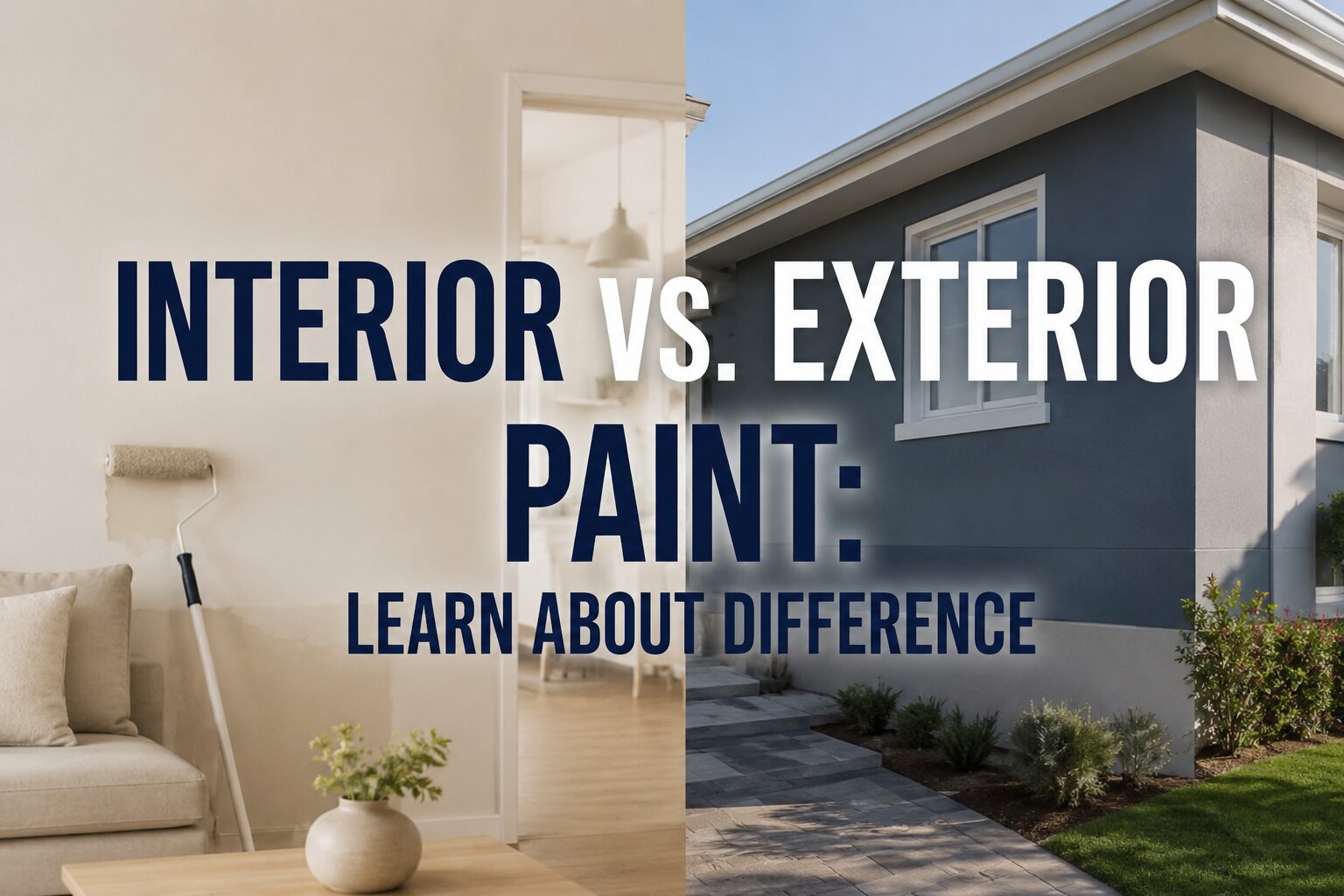
Interior paint is all about safety, a smooth finish and stain resistance (low-VOC), while exterior paint is all about longevity, flexibility to temperature changes and resistance to mildew, UV rays and fading. They are not interchangeable since interior paint peels off outdoors and exterior paint gives off toxic smells indoors.
Why the Difference Matters
Paint does more than decorate. It is designed to solve some problems. Interior paints need to stand up to cleaning, scuffing and constant inside conditions. Exterior paints must endure sun, rain, humidity and temperature changes. Each is created to accomplish its role in its environment. Mix them, and the coating breaks prematurely, which means wasted money and more frequent repaints.
What Interior Paint Is Designed to Do
Interior paints are for the areas you live in every day. The most important things about it are its beauty, how well it washes and how well it keeps the air in a house clean. Main features include:
- Smooth, washable finish resins generate a scrub-resistant surface so walls may be washed without damage.
- Stain resistance: Resists everyday marks, hand smudges, furniture smudges and spill smudges.
- Low or no VOC options: Limits odour, encourages healthier indoor air.
- Multiple sheens Select the desired look and level of durability for each room.
Interior paint is not made to withstand UV radiation, persistent dampness or temperature variations. Usually it peels or chalks within a year when used outdoors.
What Exterior Paint Is Designed to Do
Exterior paint has a different job to do. It has to be tough enough to resist the elements and yet look nice after years of exposure. The main features of this model are:
- Flexible Resins: Allow paint to expand and contract with temperature changes without cracking.
- UV protection: Helps to stop strong sunlight from causing fading and disintegration.
- Moisture resistant: helps fight mildew and guards against water incursion.
- Durability: Resists rain, snow, wind and other harsh outdoor elements.
How Professionals Match the Right Paint to the Job
Professionals select paints that are suitable for your home’s surfaces and your region’s climate. For instance:
Masonry exteriors: Need breathable coatings that let trapped moisture escape.
Kitchens and baths: Perform well with moisture-resistant sheens like satin or semi-gloss.
Trim and cabinets demand sturdy finishes that withstand daily wear and tear and frequent cleaning.