

Introduction
If you’re staring up at a dated, textured stucco ceiling and wondering what it will take (and cost) to get rid of it, you’re not alone. Stucco (often called “popcorn”) ceilings were standard in homes built between the 1950s and 1980s, prized at the time for hiding imperfections and dampening sound. Today, most homeowners see them as outdated, hard to clean, and a barrier to a brighter, more modern interior.
In short, stucco ceiling removal cost usually falls between $1 and $3 per square foot, or roughly $600 to $2,000 for an average-sized room, depending on ceiling height, texture thickness, whether asbestos testing is required, and the finish you want afterward (skim coat, smooth drywall, or repaint).
This guide breaks down exactly what drives that price, what the removal process looks like from start to finish, and how to decide whether removal or repair is the right call for your home. We’ll also cover what homeowners in Scarborough can expect from a professional ceiling renovation service, based on real project experience.
What Is a Stucco Ceiling, and Is It the Same as a Popcorn Ceiling?
A stucco ceiling, also called a popcorn, cottage cheese, or acoustic ceiling, is a spray-applied or hand-trowelled texture made from a mix of paint, sand, or vermiculite (and in older homes, occasionally asbestos fibres). While “stucco” traditionally refers to an exterior wall finish, in North American residential renovation, the term is used interchangeably with popcorn ceiling texture.
Quick answer for search: Yes, in most residential contexts, “stucco ceiling” and “popcorn ceiling” describe the same textured, bumpy ceiling finish common in homes built before 1990.
Why These Ceilings Were Popular
- Hid drywall seams, nail pops, and construction flaws
- Provided sound dampening between floors
- Cost-effective to install during mass-built housing booms
- Required no sanding or finishing skill to apply
Why Homeowners Remove Them Today
- Outdated appearance that lowers perceived home value
- Difficult to clean and prone to yellowing
- Traps dust, allergens, and cobwebs
- Potential asbestos content in pre-1980s homes
- Blocks modern lighting installations (recessed pot lights, flush mounts)
Stucco Ceiling Removal Cost Breakdown
Understanding stucco ceiling removal cost means looking at it per square foot since total price scales with room size and ceiling condition.
| Ceiling Condition / Service | Average Cost per Sq Ft | Notes |
|---|---|---|
| Basic scrape (no asbestos, standard height) | $1.00 to $1.50 | Wet-scrape method, minimal repair needed |
| Scrape + skim coat + paint | $1.75 to $3.00 | Most common full-service package |
| Asbestos testing (per sample) | $75 to $150 | Required before removal in older homes |
| Asbestos abatement (if positive) | $3 to $7+ | Requires certified abatement contractor |
| High ceilings (10ft+) or vaulted | +15% to 30% | Added labor, scaffolding, or lift equipment |
| Popcorn ceiling removal price (full home, avg 1,500 sq ft) | $2,500 to $6,000+ | Whole-house projects with painting included |
For a typical 12×12 ft bedroom ceiling (144 sq ft), homeowners can expect to pay $250 to $500 for scraping alone, or $400 to $700 including skim coating and a fresh coat of paint.
Factors That Increase the Price
- Asbestos presence: testing is mandatory in homes built before the mid-1980s. If asbestos is found, only licensed abatement professionals can safely proceed, which raises cost significantly.
- Ceiling height and access: cathedral, vaulted, or stairwell ceilings require scaffolding or lifts.
- Texture thickness: thicker, older applications take longer to wet-scrape.
- Number of coats and repairs needed: water stains, cracks, or nail pops add labor.
- Furniture and floor protection: full-service crews include masking and dust containment, which affects labor time.
- Finish type: a smooth, paint-ready skim coat costs more than a basic scrape-and-prime.
How Do You Remove a Stucco Ceiling? (Step-by-Step Process)
Professional stucco ceiling removal follows a consistent process to protect your home and ensure a smooth final finish.
Step 1: Asbestos Testing
Before any tool touches the ceiling, a sample is sent to a certified lab. This step is non-negotiable for homes built prior to 1990 and typically adds 2 to 5 business days for results.
Step 2: Room Preparation
- Furniture is moved or covered
- Floors are protected with plastic sheeting
- Walls and fixtures are masked
- Negative air machines or dust barriers are set up for containment
Step 3: Wetting the Ceiling
Water (sometimes with a small amount of dish soap) is sprayed onto the texture in sections. This softens the stucco, making it easier to scrape without excessive dust, a technique known as dust-free ceiling removal.
Step 4: Scraping
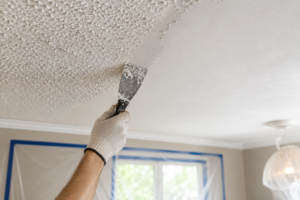
Using a wide putty knife or ceiling scraper, the softened texture is removed down to the drywall or plaster substrate.
Step 5: Repair and Skim Coating
Any gouges, seams, or nail pops are patched. A skim coat of joint compound is applied to create a smooth, paint-ready surface; this is the step that separates a professional result from a DIY attempt.
Step 6: Sanding
Once dry, the skim coat is sanded smooth. Professional crews use dustless sanding equipment to minimize airborne particles.
Step 7: Priming and Painting
A stain-blocking primer is applied, followed by your chosen ceiling paint finish, typically a flat or matte white to reduce imperfections and glare.
Total timeline: For an average 200 to 300 sq ft room, the full process, from asbestos testing to final paint, takes 2 to 4 days. Whole-home projects can take 1 to 2 weeks.
Can I Remove a Stucco Ceiling Myself?
DIY stucco removal is technically possible for small, low-risk areas, but it comes with real trade-offs.
Why homeowners attempt DIY:
- Lower upfront cost (materials only, roughly $50 to $150 for a room)
- Sense of control over timeline
Why most homeowners hire a professional instead:
- Asbestos risk: without lab testing, disturbing an asbestos-containing ceiling can expose your household to health hazards.
- Mess and cleanup: wet scraping produces heavy, sludgy debris that’s difficult to contain without proper equipment.
- Finish quality: achieving a truly smooth, seamless skim coat takes practised technique; uneven results are common on a first attempt.
- Time investment: what takes a trained crew one day can take a first-time DIYer an entire weekend or longer.
- Ceiling damage risk: aggressive scraping can gouge drywall, requiring more repair than the original texture removal.
Our take, based on hands-on project experience: DIY can work for a single small closet or low-visibility area. For main living spaces, bedrooms, or any home built before 1990, professional removal is the safer and ultimately more cost-effective choice once you factor in repair costs from DIY mistakes.
Is Stucco Ceiling Removal Worth It?
Yes, for most homeowners, removing a textured stucco or popcorn ceiling is a worthwhile investment, particularly if you’re renovating, refinancing, or preparing to sell.
Value-Adding Benefits
- Improved resale appeal: smooth ceilings read as modern and well-maintained to buyers and appraisers alike.
- Better lighting flexibility: smooth ceilings allow for recessed lighting, modern fixtures, and cleaner sightlines.
- Easier maintenance: no more textured crevices trapping dust and cobwebs.
- Healthier indoor air: removing ageing texture (especially asbestos-containing material) improves indoor air quality.
- Photography and staging: smooth ceilings photograph better for real estate listings, a small but meaningful detail in competitive markets.
When Repair Might Make More Sense
If your stucco ceiling is in good condition with no cracking, staining, or asbestos concerns and your budget is tight, a stucco ceiling repair (patching problem spots and repainting) can extend its life without a full removal. This is a reasonable middle-ground option for rental properties or homes not currently listed for sale.
Stucco Ceiling Removal vs. Repair: Quick Comparison
| Factor | Full Removal | Repair Only |
|---|---|---|
| Average cost | $1 to $3/sq ft | $0.50 to $1.50/sq ft |
| Resale value impact | High | Low to moderate |
| Timeline | 2 to 4 days per room | 1 to 2 days per room |
| Long-term maintenance | Low | Ongoing |
| Best for | Homes being sold, renovated, or updated for modern living | Rentals, budget-limited projects, ceilings in good condition |
What Happens After Stucco Ceiling Removal?
Once the texture is gone, most homeowners choose one of the following finishes:
- Smooth painted ceiling: the most popular choice; clean, bright, and low-maintenance.
- Light knockdown texture: a subtle alternative texture for homeowners wanting some visual interest without full stucco.
- Coffered or accent ceiling upgrade: for homeowners investing in a broader renovation, some choose to add trim detail or a statement ceiling feature.
A fresh ceiling finish is also the ideal time to address related upgrades, new lighting fixtures, ceiling fan installation, or a full room repaint, since the space is already prepped and protected.
Why Choose a Professional Ceiling Removal Service
At Revive Painting, ceiling texture removal is one of our most-requested renovation services, and for good reason: it’s one of the highest-impact, most visible upgrades a homeowner can make relative to cost.
Our approach is built around three principles:
- Safety first: we never skip asbestos testing on pre-1990 homes, and we partner with certified abatement specialists when needed.
- Dust control: we use wet-scrape methods and containment barriers to keep your home clean and liveable throughout the project.
- Finish quality: our crews don’t just remove texture; we skim coat, sand, and prime to a paint-ready standard so the final result looks like a brand-new ceiling, not a patched-up one.
We’ve completed ceiling removal and refinishing projects across a wide range of home styles and ages, from post-war bungalows to newer builds with vaulted great rooms, giving us practical experience with the full range of challenges a stucco ceiling can present, from stubborn thick texture to water-stained substrates needing extra repair.
Local Service Area: Scarborough and Surrounding Communities
Homeowners searching for stucco ceiling removal in Scarborough or popcorn ceiling removalnear me can rely on our local crews who understand the housing stock common to the area; many Scarborough homes built from the 1960s through the 1980s still carry original stucco ceilings, making professional asbestos testing and safe removal especially relevant here.
Related Services to Consider
While your ceiling is being refinished, it’s an efficient time to bundle in complementary services:
- Ceiling repair and refinishing: address cracks, water stains, or structural repairs alongside texture removal.
- Drywall repair and finishing: for ceilings needing more than a skim coat.
- Interior painting services: a full room repaint pairs naturally with ceiling work for a cohesive finish.
- Home interior renovation: for homeowners planning a broader update, ceiling removal is often step one.
Frequently Asked Questions
1. How much does it cost to remove a stucco ceiling?
Stucco ceiling removal typically costs $1 to $3 per square foot, or $250 to $700 for an average bedroom, depending on asbestos testing needs, ceiling height, and desired finish.
2. Is stucco ceiling the same as popcorn ceiling?
Yes. Both terms describe the same spray-applied or hand-troweled textured ceiling finish common in homes built between the 1950s and 1980s.
3. Do I need asbestos testing before removing a stucco ceiling?
If your home was built before 1990, professional asbestos testing is strongly recommended and often legally required before any removal work begins.
4. Can I remove a stucco ceiling myself?
Small, low-risk areas can be DIY-friendly, but professional removal is safer and produces a smoother, more consistent finish, especially where asbestos may be present.
5. How long does stucco ceiling removal take?
A single average-sized room typically takes 2 to 4 days from testing to final paint. Whole-home projects can take 1 to 2 weeks.
6. Does removing a stucco ceiling increase home value?
Yes. Smooth, modern ceilings are consistently favoured by buyers and appraisers and are considered a worthwhile pre-sale renovation.
7. Is stucco ceiling removal messy?
Professional crews use wet-scrape techniques and dust containment to significantly reduce mess compared to dry scraping or DIY methods.
8. Can a stucco ceiling be repaired instead of removed?
Yes, minor repairs and repainting can extend the life of a stucco ceiling in good condition, though this doesn’t offer the same value or aesthetic benefits as full removal.
Ready to Upgrade Your Ceiling?
A textured stucco ceiling doesn’t have to be a permanent fixture in your home. Whether you’re renovating one room or your entire house, understanding the real stucco ceiling removal cost helps you plan confidently and avoid surprises.
Revive Painting offers professional, dust-controlled ceiling removal and refinishing services for homeowners in Scarborough and the surrounding area. From asbestos testing coordination to the final coat of paint, our experienced crews handle every step so you get a clean, modern ceiling without the guesswork.
Contact Revive Painting today for a free, no-obligation quote on your stucco ceiling removed project, and see what a smooth, updated ceiling can do for your home.